Tuesday, December 9, 2008

Living in wine country


Some of you may know, and some of you may not, but I have finished my classes at culinary school, and now I am on my externship at The French Laundry. Culinary school finished well, and I learned so much. It was a lot of work, but 100% worth it.

The externship is a requirement of most culinary schools. Basically, what you have to do is find a job at a restaurant and work there for three months, to get real experience. Some externships are paid, many are not. In my case, it is not, but I am working at The French Laundry, in the Napa Valley in California, and learning so much.

This is an incredible restaurant. The standards we follow are probably some of the highest in the industry, and it is an intense place to work. After working here for three weeks, the best word to describe it is intense. It is a beautiful restaurant, from top to bottom; showing the hard work and attention to detail that has been put into this place. The detail that I have to put into everything I do is so incredible, and I can imagine that it shows when one comes to dine here.


I have a lot of things to say about this place, and hopefully in the next few weeks I can shed some light on what it's like to work here, because being here is an incredible experience. The people I am working with are some top notch people. Everyone in the kitchen is so knowledgeable and intelligent, especially when it comes to food and working in the kitchen.

Here are some examples of the atmosphere I am working in:
  • Under every clock there is a small plaque that says "Sense of Urgency"
  • There is a live video feed of the kitchen in the sister restaurant, per se in New York
  • There is a plaque in the back prep kitchen that says, "When you acknowledge, as you must, that there is no such thing as perfect food, only the idea of it, then the real purpose of striving toward perfection becomes clear: to make people happy. That's what cooking is all about."
This last quote is from Thomas Keller's "The French Laundry Cookbook." This is the motto of the restaurant. It gives purpose as to why I am picking through five pounds of arugula to find the 100 most perfect leaves. It gives purpose as to why every egg shell I trim has to be perfectly smooth where it is cut. It gives purpose when I am straining stock at least three times. It gives purpose when I am cleaning mushrooms that every single speck of dirt is gone.

Everything is in incredible detail, and it is a very intense atmosphere to be in. Every day I am being pushed to produce the best product possible, pushed to do my best, by the people around me and myself.

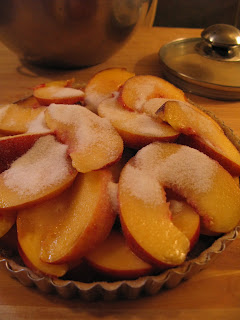
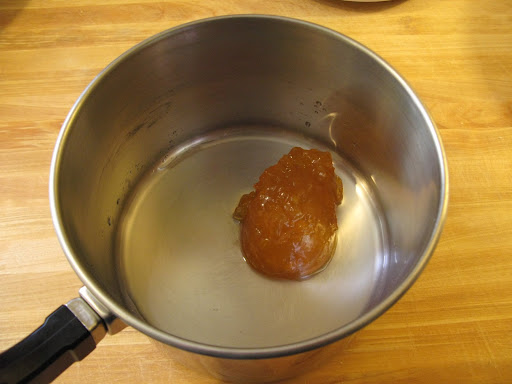
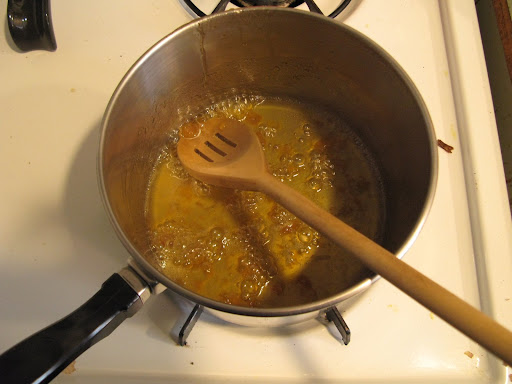
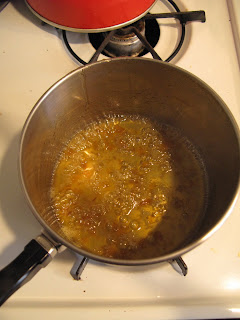
I don't have any more pictures of the restaurant, or the food yet, but here are some pictures of Napa Valley in December, around 62 degrees.








Thursday, September 4, 2008

Tarts

Wow, it's almost been two months. I hope you haven't been holding your breath.

It is September 4th, and next week I start International Cuisine; the last class (three weeks long) before the six weeks of Restaurant Practical. If you're in the Portland area, I recommend you come by the school restaurant, because I will either be cooking or serving.

But right now, I'm practicing my desserts for my final practical test for the school (which is in the first week of the Restaurant Practical).

So here's a tart I made.


When it comes to baking, I have learned that a scale is the most important thing. Measuring flour cannot be done perfectly without it. Flour can clump together, so you could essentially fit a lot more into a cup, but the scale will not lie to you. Also, with baking, having the perfect amount of some of these ingredients is essential. These recipes aren't thrown together, they have been perfected over centuries, so please get a scale.

So, the essential ingredients are pastry flour, sugar, chilled butter, salt, lemon zest, eggs, and a little water.


Here, I am going to make pâte brisée (translation: broken dough), which is a short dough, meaning it is high in shortening, or fat, or butter.


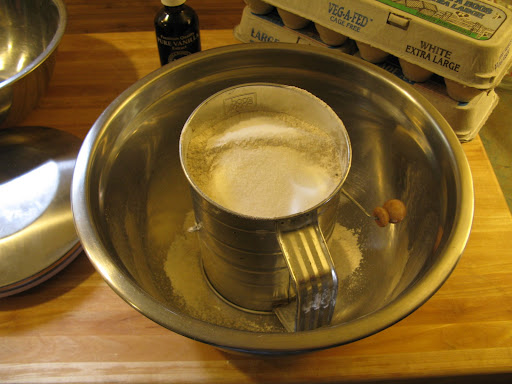
Sift the flour, sugar and salt together.


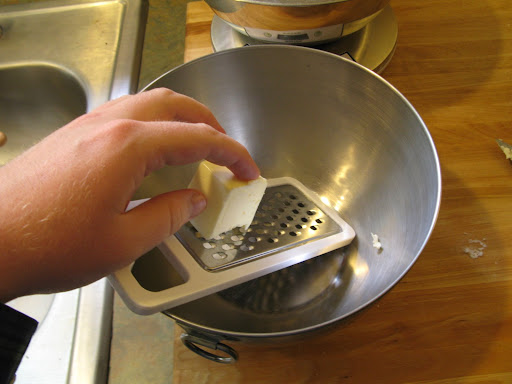
Now, take the butter (make sure it's cold), and break it up into small, pea-sized bits. Using a cheese grater helps a lot. My hands are quite warm, so if I broke it up with my fingers, it would melt, which I don't want to happen.


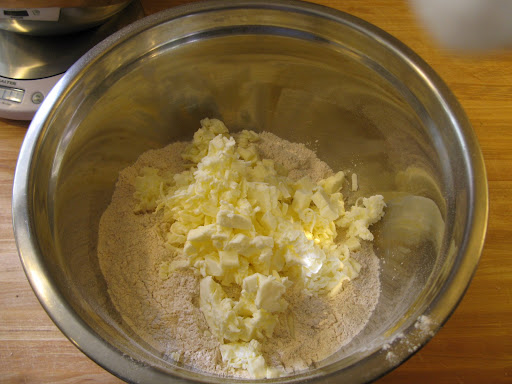
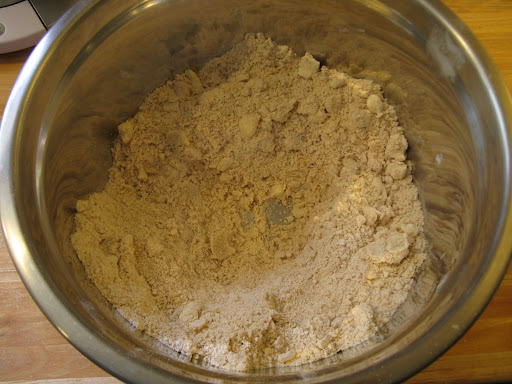
Add the cut butter to the flour, and mix with your fingertips, making sure to 'cut' the butter into the flour. This is basically making sure the butter is still in small, pea-sized bits, and not completely mixed with the dry ingredients.


It should look like oatmeal, and there should be no big (bigger than a peanut) butter bits.


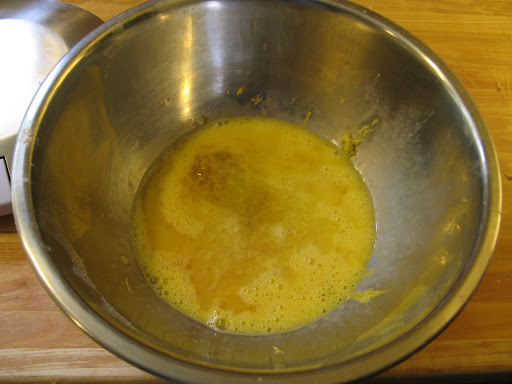
Now, mix the eggs, water, vanilla and lemon zest.


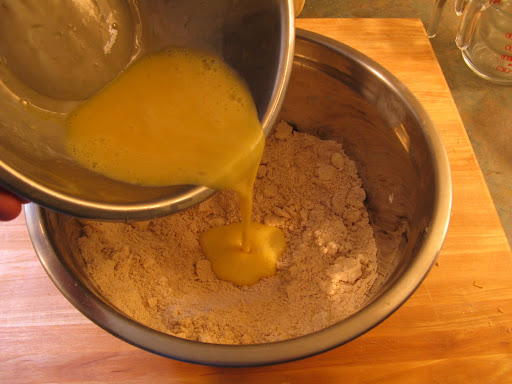
Make a well in the center of the dry ingredients, and pour in the wet.


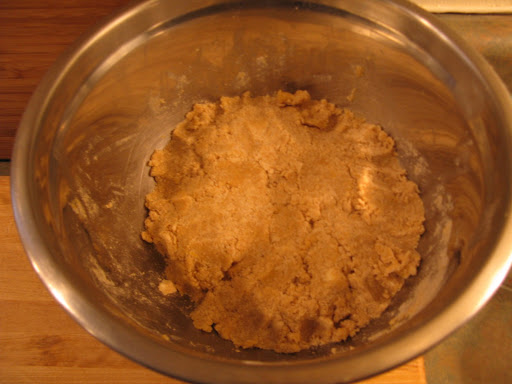
Mix lightly to make a soft dough. You don't need to completely mix it yet.


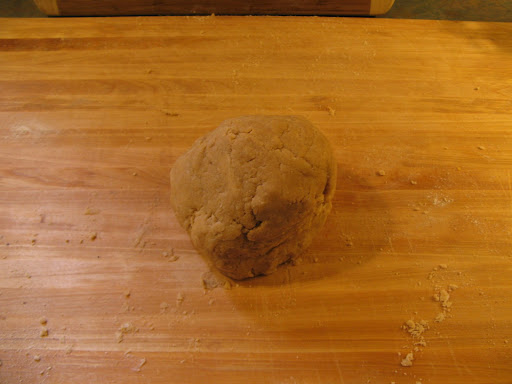
Lay out the dough on a lightly floured surface, and knead a few times until it's completely mixed and holds its shape well.


When it gets to the point that the ball feels greasy, stop, because that means you are melting the butter.


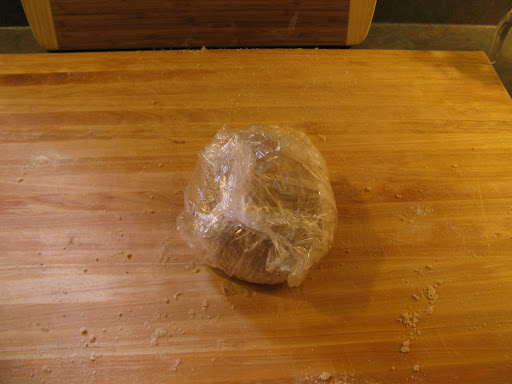
Now, wrap in plastic and put it in the refrigerator for at least a half hour.


... a half hour later ...


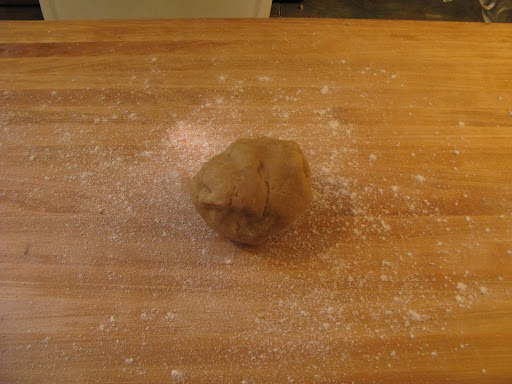
Lay your dough ball out on a floured surface. Let it sit for a few minutes to kind of warm up, so it's pliable, or mash it around in your hands for a few seconds.


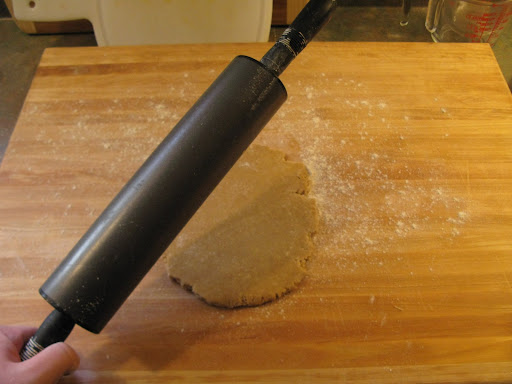
Pound it out and roll it out.


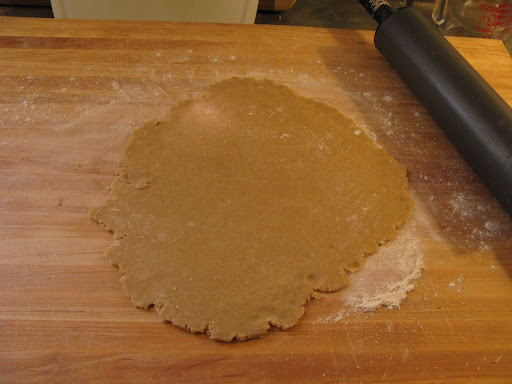
Pâte brisée should be rolled out to about 1/8 inch thick.


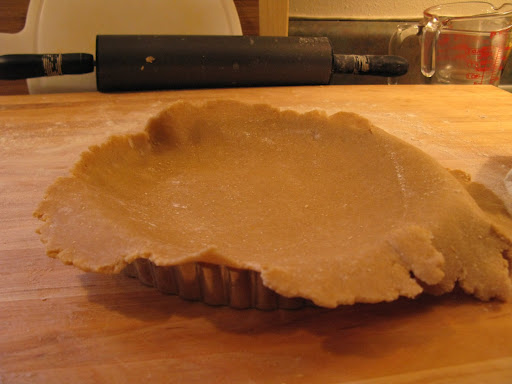
If you're having a hard time picking up the dough without breaking it, roll it around the rolling pin, and lay it on top of the tart pan.


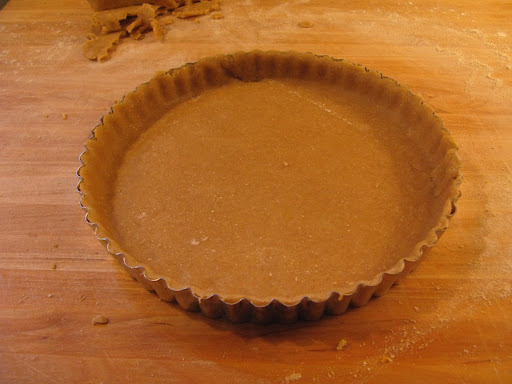
Don't stretch the dough, because it will shrink when you bake it. Lightly press the dough into the corners, and push it down over the edge of the pan to cut off the extra.


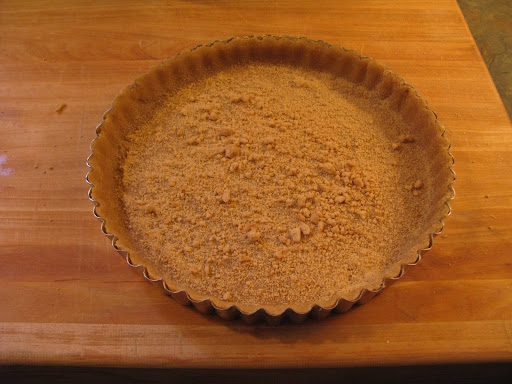
Now, line it with a layer of cookie crumbs to absorb the liquid that will come out of the fruit.


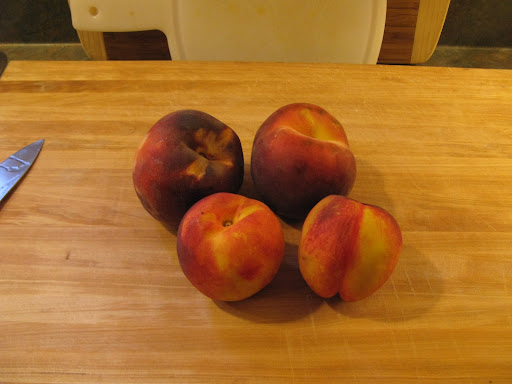
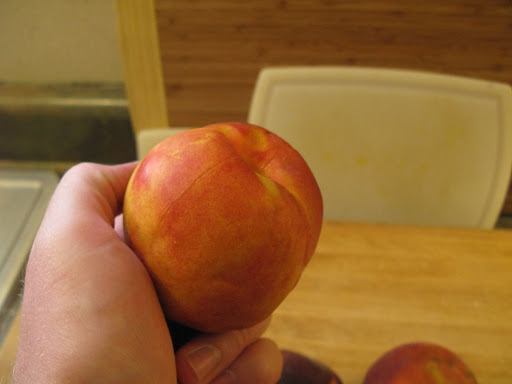
Here i've got some really nice peaches and apricots from the Portland Farmer's Market, which are delicious and in perfect season right now.


Slice the peaches and apricots around the pit to de-pit them.


Slice them up!


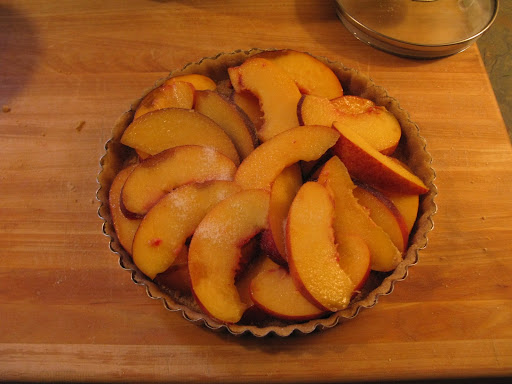
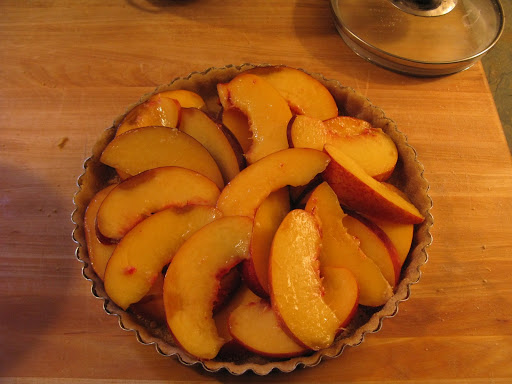
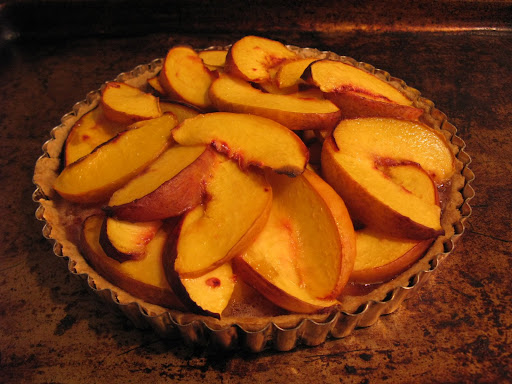
Lay the slices in the tart shell as decoratively as you can. The peaches here are the focus here, so it's ok if it looks a little 'rustic'.


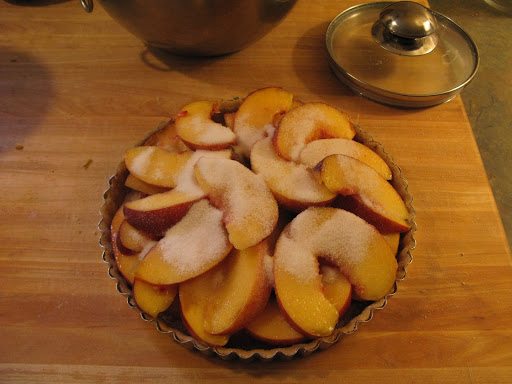
I put a few layers down, sprinkled some sugar over the top, put another layer in, and sprinkled some more sugar on top.


At this point, the tart makes itself.

Put it in the oven at 350 for 45 minutes. The fruit should get very tender and the dough should brown slightly.


While it's baking, you can make the apricot glaze that goes on top, to make it more appealing and shiny.

You can use whole apricots, but i just bought some apricot preserves and melted them in a pan with some water.


Bring it up to a boil, and when everything dissolves . . .


Strain it.


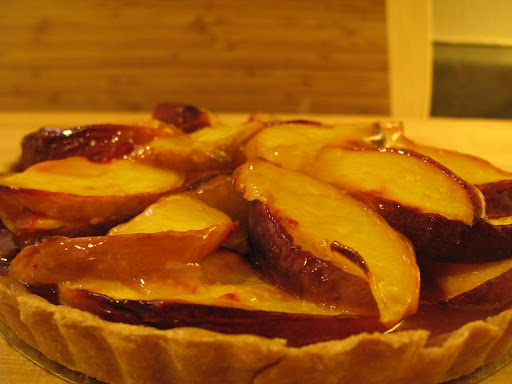
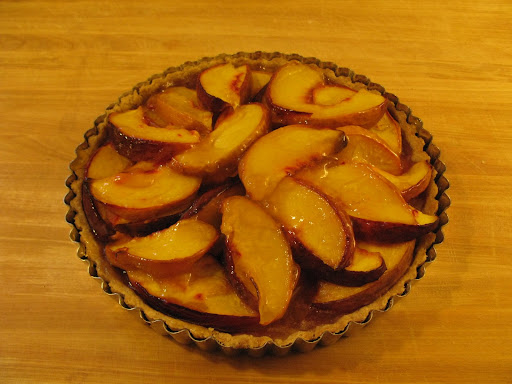
And it's baked!


Just brush the apricot glaze on top.


Tuesday, July 15, 2008

Candy


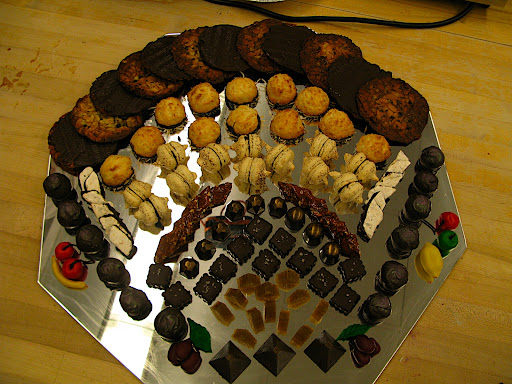
I made some candy in class.

We had to temper chocolate, heat sugar to different temperatures to create different textures, fill truffles and make marzipan fruit. It was al very interesting and fun.

Oh yeah, it was tasty too.


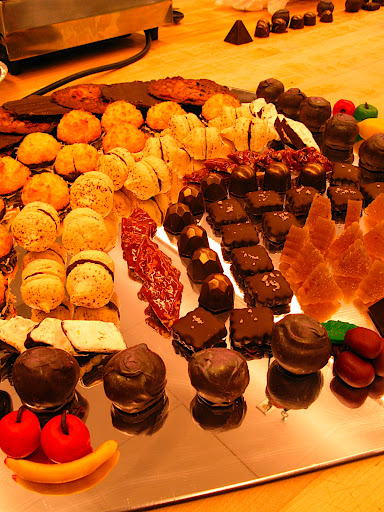
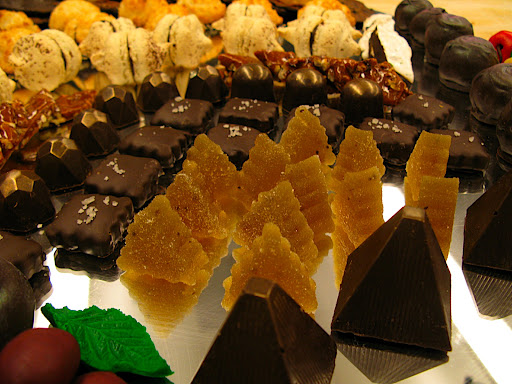
We made French truffles, Swiss truffles, kiwi jellies, nougat, caramels coated in chocolate, French macaroons, coconut macaroons, almond florentines, pecan brittle, and marzipan flavored fruit shapes.